
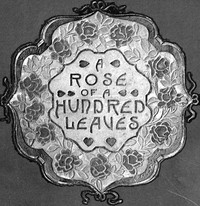
A Rose of a Hundred Leaves: A Love Story by Amelia E. Barr
Published in 1881, Amelia E. Barr's novel feels both classic and surprisingly fresh. It's a story that proves human emotions—guilt, fear, and the desperate hope for redemption—haven't changed much in 140 years.
The Story
The story follows Agnes, a young woman facing poverty after her father's death. In a moment of sheer desperation, she hides her true background and family name to marry the wealthy and honorable Raymond. He adores her, believing her to be the refined, well-born woman she pretends to be. Agnes spends her days in a beautiful home, loved by her husband, yet utterly haunted by her lie. Every kind word from Raymond feels like a reproach. The plot thickens when figures from her real past begin to reappear, threatening to expose her. The central question isn't just 'Will she be found out?' but 'Can she ever forgive herself, and can love truly exist without complete honesty?'
Why You Should Read It
Barr writes with such psychological sharpness. Agnes isn't a villain; she's a relatable, flawed person who made a bad decision for what felt like good reasons. You feel her anxiety in your bones. The love story is quiet and deep, more about the quiet moments of domestic life and unspoken understandings than grand gestures. What really got me was the book's exploration of identity. Agnes literally doesn't know who she is anymore—the poor girl from her past or the lady of the manor she's pretending to be. It’s a fascinating, internal struggle that drives every page.
Final Verdict
This is a perfect pick for readers who love character-driven historical fiction. If you enjoy the emotional tension of a novel like Jane Eyre but want something a little less Gothic and more focused on everyday moral dilemmas, you'll love this. It's also a great find for anyone curious about 19th-century popular fiction written by a woman. Barr's voice is clear, compassionate, and incredibly engaging. Just be warned: you might find yourself yelling 'Just tell him!' at the book more than once.
This publication is available for unrestricted use. Preserving history for future generations.
Kimberly Perez
4 months agoThe analytical framework presented is both innovative and robust.
George White
6 months agoThought-provoking and well-organized content.
John Moore
1 year agoI decided to give this a try based on a colleague's recommendation, the author clearly has a deep mastery of the subject matter. I’ll definitely be revisiting some of these chapters again soon.
Jennifer Johnson
3 months agoThe author provides a very nuanced critique of current methodologies.




Patricia Taylor
9 months agoI've been looking for a reliable source on this topic, and the narrative arc keeps the reader engaged while delivering factual content. I'll be recommending this to my students and colleagues alike.