1

Brownies and Bogles — Edition Insights
(0 User reviews)
365
Project Gutenberg
2012
Not confirmed
Fantasy literature; Conduct of life -- Juvenile fiction; Children -- Conduct of life -- Juvenile fiction; Fairies -- Juvenile fiction; Goblins -- Juvenile fiction; Trolls -- Juvenile fiction; Elves -- Juvenile fiction; Mermaids -- Juvenile fiction; Puck (Legendary character) -- Juvenile fiction; Will-o'-the-wisp -- Juvenile fiction; Dwarfs -- Juvenile fiction; Kobolds -- Juvenile fiction; Mermen -- Juvenile fiction; Pixies -- Juvenile fiction; Changelings -- Juvenile fiction
Readers of public-domain and historical texts
Project Gutenberg digital edition
en
Edition facts
Words
28,080
Reading time
123 min
Text sections
4
The source record for Brownies and Bogles — Edition Insights measures this digital text at 28,080 words, 2 hr 3 min estimated reading time, and 4 detected text sections.
The text analysis averages about 25.3 words per sentence, while the detected sections provide another way to judge how the source is divided.
Project Gutenberg metadata also associates the work with “Fantasy literature,” connecting these edition facts with the source record’s subject description.
Source:
Project Gutenberg record #39782
Louise Imogen Guiney's 1888 survey of fairy folklore classifies sprites by type and region, drawing on European traditions. The opening chapter defines fairies broadly, including romance knights, while later excerpts detail water-folk like Nixies and Merrows, with specific traits such as wet hems and stolen caps. The book's structure moves from general to specific, blending poetic description with folkloric catalog.
Read the complete public-domain text at its original source.
Read on Project GutenbergLouise Imogen Guiney opens Brownies and Bogles by redefining the term "fairy" beyond modern expectations. She notes that fairies were once understood to include the knights and ladies of romance, as in Spenser's Faery Queen or tales of Arthur and Roland—figures "glorified and magnified by tradition." This broad framing sets the stage for a work that is as much a literary commentary as a folklore collection. The book's twelve chapters move from general fairy rulers to specific types: brownies, water-folk, mischief-makers, and changelings. Guiney's voice is learned but playful, treating her subject with affectionate precision.
A Broad Definition of Fairy
Guiney begins by challenging the reader's assumptions. She writes that a fairy is "a humorous person sadly out of fashion," yet one with "a long and prosperous run on this planet." This opening sentence signals both wit and historical awareness. She then expands the category to include the idealized figures of medieval romance, not just small sprites. The chapter establishes that the book will consider fairies as a diverse class, encompassing everything from Spenser's dream-people to the household helpers of folklore. This inclusive approach allows Guiney to draw on a wide range of sources, from English poetry to Scandinavian legends.
Water-Folk and Their Telltale Signs
The excerpt on water-folk demonstrates Guiney's method of cataloging by region and trait. She describes Nixies, Korrigans, Ondins, and Roussalkis, noting that the engaging Nixies were "very minute and mischievous." Physical details serve as identification: the Nix-lady's dress or apron was "perpetually wet," while the Nix-man had slit ears and feet he carefully concealed. The Merrow, an Irish mermaid, carried a diving-cap that, if stolen, forced her to marry the thief—until she found it again and fled back to "the kind sea-caves." These precise, recurring details give the folklore a tangible quality.
The Nix's Dual Nature
Guiney contrasts the fierce, grudging Nix with his more benevolent wife. The Nix harmed divers and fishermen, while his comelier wife "befriended human beings to the utmost of her power." This gendered distinction appears in several traditions she cites. A notable example is the little old Nix near Ghent who lived in the Scheldt; he cried and sighed much, did no mischief, and vanished when children asked what troubled his conscience. Such anecdotes humanize these creatures, making them objects of curiosity rather than mere monsters. The chapter balances general rules with specific, memorable exceptions.
Structure and Reading Strategy
The book's organization moves from the general to the particular, from fairy rulers to specific types like brownies, water-folk, and changelings. Each chapter focuses on a category, drawing examples from multiple cultures. Readers will benefit from noting the recurring motifs: stolen objects (caps, fish-skins), telltale wetness, and the tension between helpful and harmful sprites. Guiney's prose is descriptive rather than analytical; she presents folklore without heavy interpretation. The final chapter, "The Passing of the Little People," suggests a narrative arc from belief to loss. Pay attention to how the opening definition of fairy as both sprite and romance figure informs the later, more specific chapters.
Guiney's book rewards a patient, comparative reading. Notice how she weaves together traditions from Scandinavia, Germany, Britain, and beyond, often highlighting the same story type in different cultures. The illustrations by Edmund H. Garrett add a visual dimension, depicting scenes like the little old Nix near Ghent. Let the book's structure guide you: each chapter builds on the previous, from general concepts to specific creatures. The final chapter's title hints at a wistful conclusion, but the excerpts do not reveal whether Guiney laments or celebrates the fairies' decline.
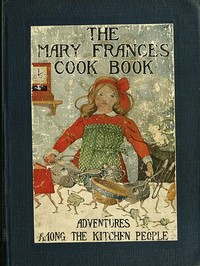
There’s something tender about Guiney’s water-folk, those damp hems and stolen caps, how a creature keeps one small thing for itself. It reminded me, oddly, of my old The Mary Frances cook book — A Closer Reading, where every recipe feels like a kept secret from a gentler kitchen. Both are quiet inventories of wonder.
There are no reviews for this eBook.
There are no comments for this eBook.
Reader reflection
How did this book work for you?
Your answers remain private and are stored only in this browser.
Your progress
0
/
10
2
How did the book work for you overall?
3
How likely are you to recommend this book?
4
How much effort did this book require?
5
How understandable was the text?
6
How original did the book feel?
7
Was the book what you thought it would be?
8
Did the book give you something worth debating?
9
What changed or sharpened your thinking?
10