1

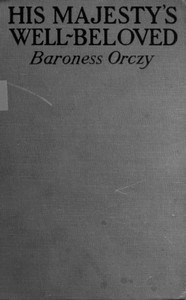
His Majesty's Well-Beloved An Episode in the Life of Mr. Thomas Betteron as told by His Friend John Honeywood — A Closer Reading
(0 User reviews)
159
Project Gutenberg
2012
Not confirmed
Great Britain -- History -- 17th century -- Fiction; Actors -- Fiction; Betterton, Thomas, 1635?-1710 -- Fiction
Readers of public-domain and historical texts
Project Gutenberg digital edition
en
Edition facts
Words
77,788
Reading time
339 min
Text sections
11
The source record for His Majesty's Well-Beloved An Episode in the Life of Mr. Thomas Betteron as told by His Friend John Honeywood — A Closer Reading measures this digital text at 77,788 words, 5 hr 39 min estimated reading time, and 11 detected text sections.
The text analysis averages about 18.8 words per sentence, while the detected sections provide another way to judge how the source is divided.
Project Gutenberg metadata also associates the work with “Great Britain -- History -- 17th century -- Fiction,” connecting these edition facts with the source record’s subject description.
Source:
Project Gutenberg record #39787
Baroness Orczy's novel, framed as a letter from John Honeywood, recounts Thomas Betterton's entanglement with Lady Castlemaine. The narrative shifts from epistolary form to third-person, blending Restoration drama with political intrigue.
Read the complete public-domain text at its original source.
Read on Project GutenbergThe novel opens with a letter from John Honeywood to Mary Saunderson, written in a formal, deferential style typical of 17th-century correspondence. Honeywood defends his friend Thomas Betterton against rumors, using phrases like 'Caustic of wit he is, but neither a Braggart nor a Bully.' This epistolary frame establishes a confessional tone that soon gives way to a more conventional third-person narrative, marking a distinct shift in voice.
Orczy employs a dual perspective: Honeywood's humble clerk persona and Betterton's theatrical world. The language alternates between Honeywood's self-deprecating 'humble Clerk and Scrivener' and the dramatic urgency of Betterton's actions, such as ordering linkmen on a rainy night. This contrast in registers creates a layered narrative that moves from intimate confession to action-driven plot.
Epistolary Framing and Narrative Voice
The story begins as a letter, with Honeywood addressing Mary Saunderson directly. His language is ornate and pleading: 'May it please you that I, an humble Clerk and Scrivener, do venture to address so talented a Lady.' This formal address establishes a tone of deference and urgency. However, the narrative soon abandons the letter format, transitioning to a third-person account. Honeywood explains this shift by noting he 'chose the medium of a pen' to speak impartially, but the change is abrupt. The opening chapters thus oscillate between Honeywood's subjective defense and a more objective recounting of events, creating a tension between personal bias and factual report.
Orczy uses this dual voice to highlight Honeywood's role as both participant and observer. He admits his words were 'the turning point in the workings of his Soul,' yet he also claims to be a tool of Destiny. This self-awareness adds complexity to the narration, as Honeywood is not merely a chronicler but an active agent in Betterton's fate.
Pacing and Atmospheric Detail
The narrative pace shifts markedly between introspective passages and brisk action sequences. In Chapter IX, the description of a rainy London night slows the tempo: 'The streets were almost deserted and as dreary as London streets alone can be on a November evening.' Orczy lingers on sensory details—'hundreds of Puddles into shining reflections, like so many glimmering Stars'—before accelerating into a hurried walk through Palace Yard. This alternation between static observation and movement mirrors Betterton's own agitation.
The use of linkmen and lanterns creates a visual rhythm, with 'vivid bar of brilliance' cutting through darkness. The threat of 'Footpads and Highway Robbers' adds tension, while Betterton's 'weighted stick' and athleticism suggest readiness for conflict. These details not only set the scene but also modulate the story's energy, preparing for the political intrigue hinted at in the chapter title 'A Last Chance.'
Characterization Through Language
Betterton's character is revealed through his speech and actions rather than direct description. He speaks in theatrical metaphors, calling a potential scaffold death 'heroic' and noting it would 'war with all preconceived Dramatic Values.' This self-dramatization aligns with his profession as an actor. Honeywood, by contrast, uses legalistic phrasing—'fidelity and loyalty have oft been tried'—reflecting his clerkly background. The contrast between the two men's voices underscores their social positions: Betterton, the celebrated actor, and Honeywood, the humble scrivener.
Orczy also uses indirect characterization through setting. Betterton's disregard for discomfort ('wet to the Skin, but Mr. Betterton appeared quite oblivious') suggests a man driven by purpose, while Honeywood's timidity ('Being somewhat timid by nature') highlights his role as a foil. The dialogue, though limited in the excerpts, shows Betterton's commanding tone: 'I thank you, friend, for reminding me of this.'
Readers should attend to the shifts in narrative distance—from Honeywood's intimate letter to the more detached third-person sections. Orczy's use of Restoration-era language, with its capitalized nouns and formal syntax, rewards careful reading. The novel's pacing, alternating between reflective passages and urgent action, mirrors the tension between personal loyalty and political danger. Notice how the weather and street scenes function as more than backdrop, often signaling changes in mood or plot direction.
Reading how Baroness Orczy lets Honeywood piece together Betterton’s world through fragments, I kept thinking of another quiet voice—the one in Half-Hours with the Idiot — Background and Themes. There is the same patient unraveling, as if truth only surfaces through sideways glances. Both books feel like letters left open on a desk, inviting lingering, not conclusions.
There are no reviews for this eBook.
There are no comments for this eBook.
Reader reflection
Your personal reading reflection
Build a private reading journal entry for this title.
Your progress
0
/
10
2
How did the book work for you overall?
3
Would you recommend this book to another reader?
4
How much effort did this book require?
5
How valuable was this book for your own interests?
6
How personally connected did you feel to the book?
7
Did the book meet your expectations?
8
Could you follow the author’s main argument?
9
What is the main idea you are taking away?
10