1

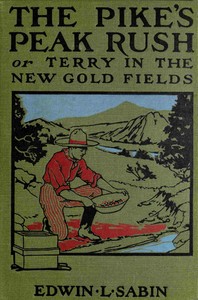
The great Pike's Peak rush — A Closer Reading
(0 User reviews)
846
Project Gutenberg
2011
Not confirmed
Western stories; Gold mines and mining -- Fiction; Pikes Peak (Colo.) -- Fiction
Readers of public-domain and historical texts
Project Gutenberg digital edition
en
Edition facts
Words
63,926
Reading time
278 min
Text sections
7
The great Pike's Peak rush — A Closer Reading can be approached with a clearer sense of reading commitment from its source measurements: 63,926 words, 4 hr 38 min estimated reading time, and 7 detected text sections.
The text analysis averages about 12.0 words per sentence, while the detected sections provide another way to judge how the source is divided.
Project Gutenberg metadata also associates the work with “Western stories,” connecting these edition facts with the source record’s subject description.
Source:
Project Gutenberg record #37943
An editorial note on Edwin L. Sabin's 1917 western, focusing on the tension between inexperience and expertise in the 1859 Pike's Peak gold rush, as seen through the eyes of young Terry Richards and his companions.
Read the complete public-domain text at its original source.
Read on Project GutenbergEdwin L. Sabin's The Great Pike's Peak Rush (1917) opens with a father's exclamation—"Twenty-five thousand people—and more on the way!"—that sets the stage for a story less about individual heroism than about the collective frenzy of a gold rush. The narrative follows Terry Richards and his partner Harry Revere as they navigate the chaotic Pike's Peak region in 1859, but the book's real subject is the gap between expectation and reality. Sabin repeatedly underscores how little the newcomers know: Terry marvels that gold-bearing dirt "all looks alike—just common dirt!" while experienced miners like Green Russell charge $100 a day to teach the basics. The novel's structure, with chapter titles like "Tough Luck for the Limited" and "Now Where Is the 'Elephant'?", signals a story built on setbacks and hard-won lessons rather than easy strikes.
Knowledge as Currency
The excerpts repeatedly emphasize that in the gold fields, information is more valuable than gold itself. When Professor Stanton eagerly asks to be put on a good claim, Green Russell offers to prospect for him at $100 a day—a sum that shocks Terry. Harry Revere observes, "The secret of making money is to have something the other fellow will pay for: sometimes that's goods, and again it's knowledge." This theme recurs in the contrast between the "tenderfeet" and the "Forty-niners" like Sol Judy and Pine Knot Ike, whose experience commands respect. Even the boy Archie Smith, though a newcomer, has learned enough to offer advice. Sabin structures the narrative around this asymmetry: the greenhorns must learn not only where to dig but whom to trust, and the novel's tension derives from their slow acquisition of practical wisdom.
The Landscape of Disappointment
Sabin's descriptions of the gulch emphasize industry without reward: "a hive of industry—saw and hammer at work, as well as pick and spade; but amidst it all there seemed to be no place for the Extra Limited. A general disappointment was in the air, with so many persons working hard and as yet getting nothing." This passage captures the central irony of the rush: backbreaking labor yields only "common dirt." The novel's setting—the Pike's Peak region—is not a landscape of instant riches but of persistent toil. Even when Pat Casey strikes gold, his pan yields only "a trace of yellow" and a pebble-sized nugget, a modest find that nonetheless triggers a celebration. Sabin uses such moments to ground the fantasy of easy wealth in the gritty reality of prospecting, where success is measured in dollars and cents per pan, not in mythical fortunes.
Voices of the Rush
The dialogue in the excerpts reveals a community defined by its idioms and social hierarchies. Pat Casey's Irish brogue—"Sure, Oi'm rich!"—and his playful command that half the onlookers "kape away so yez won't carry off me gold on yez feet" give the text a vernacular energy. The cast list includes figures like "Horace Greeley" and "John Gregory," historical personages who appear as characters, blending fact with fiction. Sabin also uses the characters' names to signal their roles: "Pine Knot Ike" suggests a rough-hewn local, while "Thunder Horse" and "Bad Medicine" hint at Native American presence, though the excerpts offer little detail. The dialogue often serves to convey information—as when Green Russell explains that Gregory found his lode "by any pure luck"—but it also builds a sense of a crowded, noisy world where everyone has an opinion and a scheme.
Readers approaching The Great Pike's Peak Rush should expect a story that values process over outcome. Sabin's focus on the mechanics of prospecting—the cost of lumber, the price of claims, the weight of a pick—grounds the adventure in practical detail. The novel rewards attention to how characters learn, fail, and adapt, rather than to any single dramatic event. The excerpts suggest a book that is as much about the social dynamics of a boomtown as about the search for gold, making it a useful document for understanding how the 1859 rush was imagined by an early twentieth-century author.
That rainy afternoon, I kept returning to Sabin's dust-caked optimism, the way Terry's inexperience masqueraded as grit. It made me think of other grand pretenses, of roles played until they fit. Later, I stumbled upon His Majesty's Well-Beloved An Episode in the Life of Mr. Thomas Betteron as told by His Friend John Honeywood — A Closer Reading, and found the same uneasy dance between the man and the part he plays.
There are no reviews for this eBook.
There are no comments for this eBook.
Reader reflection
Your personal reading reflection
Build a private reading journal entry for this title.
Your progress
0
/
10
2
How did the book work for you overall?
3
Would you recommend this book to another reader?
4
How easy was the book to follow?
5
Which part made the strongest impression?
6
Would you start a conversation about this book?
7
Was the book what you thought it would be?
8
Did any part of the book stay with you emotionally?
9
What did this book teach you most?
10