1

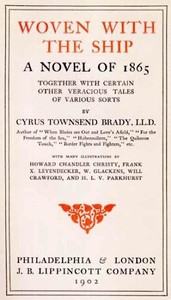
Woven with the Ship: A Novel of 1865 Together with certain other veracious tales of various sorts — Key Ideas to Explore
(0 User reviews)
78
Project Gutenberg
2012
Not confirmed
War stories; United States -- History -- Civil War, 1861-1865 -- Fiction; Short stories, American
Readers of public-domain and historical texts
Project Gutenberg digital edition
en
Edition facts
Words
92,887
Reading time
404 min
Text sections
11
Before opening Woven with the Ship: A Novel of 1865 Together with certain other veracious tales of various sorts — Key Ideas to Explore, the edition data offers a quick orientation: 92,887 words, 6 hr 44 min estimated reading time, and 11 detected text sections.
The text analysis averages about 16.3 words per sentence, while the detected sections provide another way to judge how the source is divided.
Project Gutenberg metadata also associates the work with “War stories,” connecting these edition facts with the source record’s subject description.
Source:
Project Gutenberg record #39097
A Civil War novel framed by a ship's construction, paired with short stories that range from a theatrical murder confession to a tale of a haunted ship. The excerpts reveal a narrator who directly addresses the reader and a preface that playfully defends the practice of writing prefaces.
Read the complete public-domain text at its original source.
Read on Project GutenbergThe preface of Woven with the Ship opens with a self-deprecating confession: the author admits to being “one of the few remaining authors who write them” and even apologizes for a previous book that lacked one. This playful, meta-textual voice sets the tone for a work that is as much about storytelling as it is about the story itself. The novel’s title refers to a literal ship, described in the preface as “just such a one as I have described,” and the narrative is woven around its construction and fate during the final year of the Civil War.
The excerpts also include a lengthy, vivid description of a performance of The Bells starring Sir Henry Irving, focusing on the actor’s ability to make the audience forget his identity and see only the character Matthias. This theatrical interlude, with its “damnable iteration of chiming sleigh-bells,” suggests that the collection may explore themes of guilt, performance, and the line between reality and illusion.
A Preface That Defends Prefaces
The preface is an unusual piece of self-awareness. Brady writes that “prefaces remind me of a certain text of Scripture,—i.e., ‘the last shall be first,’—for they are things written after which go before!” He then admits to being a reader of prefaces and one of the few authors who still writes them. This meta-commentary is not merely whimsical; it establishes a narrator who is conscious of the conventions of fiction and eager to engage the reader directly. The preface also reveals a biographical detail: the author spent time as a young sailor “fresh from his graduation at the United States Naval Academy” and recalls “pleasantest days … in the shadow of the old ship.” This personal connection suggests that the novel’s setting may draw on real experience, though the excerpts do not confirm how closely the fiction follows fact.
Theatrical Realism and the Spectacle of Guilt
One of the “veracious tales” included in the volume describes a performance of The Bells by Sir Henry Irving. The excerpt dwells on the audience’s reaction: “the silence … was oppressive,” and “the gaze of every man and woman and child … was concentrated upon that beautiful, mobile, terrible face.” The narrative emphasizes the actor’s complete transformation—“the great actor’s identity was lost, merged, forgotten in the character he portrayed”—and the way the play forces Matthias to relive his murder. The story then breaks the theatrical illusion when a real cry of anguish comes from the audience, suggesting that the boundary between performance and reality can collapse. This tale, while separate from the main novel, shares with it an interest in hidden crimes and public confession.
Catalog Subjects vs. Actual Content
The Project Gutenberg record categorizes this work as “Science Fiction & Utopias,” yet the excerpts contain no hint of futuristic or speculative elements. The novel is set in 1865 and deals with the Civil War; the short stories include a detailed account of a 19th-century stage play. The subject headings “War stories” and “United States – History – Civil War, 1861-1865 – Fiction” are accurate for the novel portion, but the science fiction label appears to be a misclassification. Additionally, the secondary topic “historical-fiction” fits, while “short-stories” correctly describes the collection’s format. Readers expecting science fiction will find instead a blend of wartime romance and theatrical melodrama, anchored by the ship-building frame.
The excerpts provide only a partial view of this collection, but they reveal a writer who enjoys narrative framing devices and direct address. The preface’s self-consciousness, the detailed theatrical set piece, and the recurring motif of ships and the sea suggest a work that values atmosphere and voice as much as plot. Readers should approach the novel as a period piece that may shift between genres, and the short stories as independent but thematically linked explorations of guilt, performance, and memory.
There’s something tender about the way Woven with the Ship keeps circling back to the narrator’s quiet faith in the reader, as if we’re old friends catching up. That same unhurried warmth lingers in Half-Hours with the Idiot — Background and Themes, where the rambling feels less like storytelling and more like a shared memory still settling.
There are no reviews for this eBook.
There are no comments for this eBook.
Reader reflection
How will you remember this book?
Save your reaction, strongest insight, and memorable passage.
Your progress
0
/
10
2
Was reading this book enjoyable?
3
Would you pass this book on to a friend?
4
How much effort did this book require?
5
How much did the book move you?
6
How did the pace of the book feel?
7
How distinctive were its ideas or approach?
8
Did the book give you something worth debating?
9
In one sentence, what did you learn?
10