1

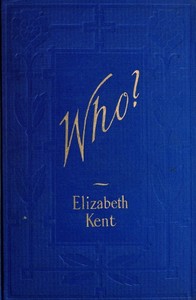
Who? — Inside the Classic
(0 User reviews)
1549
Project Gutenberg
2011
Not confirmed
Fiction; Detective and mystery stories; Love stories
Readers of public-domain and historical texts
Project Gutenberg digital edition
en
Edition facts
Words
67,725
Reading time
295 min
Text sections
7
For Who? — Inside the Classic, the stored edition analysis reports 67,725 words, 4 hr 55 min estimated reading time, and 7 detected text sections.
The text analysis averages about 13.3 words per sentence, while the detected sections provide another way to judge how the source is divided.
Project Gutenberg metadata also associates the work with “Fiction,” connecting these edition facts with the source record’s subject description.
Source:
Project Gutenberg record #35205
A mystery novel where a man returns to England to find a woman claiming to be his wife, but her age and injuries raise doubts. The story unfolds through tense confrontations and a detective's investigation.
Read the complete public-domain text at its original source.
Read on Project GutenbergThe novel opens with Cyril Crichton returning to England on a raw October morning, immediately establishing a mood of gloom and regret. His muttered self-reproach—'What a mess I have made of my life!'—sets a personal stakes that intertwines with the mystery. The structure alternates between Cyril's perspective and the detective's scrutiny, creating a push-pull dynamic. Recurring images of closed doors, locked compartments, and physical barriers mirror the characters' emotional concealments. The movement between scenes is swift, often cutting from a tense dialogue to a solitary reflection, as when Cyril's attempt to send a wire is thwarted by a closed telegraph office, a small but telling detail about his isolation.
The Compartment as a Stage
The first chapter, 'The Woman in the Compartment,' uses the confined space of a train carriage as a stage for initial encounters. The description of passengers as 'pale and dishevelled' after the Channel crossing sets a tone of disarray. Cyril's frantic jump onto a moving train—'flinging off a porter's detaining hand'—is a physical manifestation of his impulsive nature. This compartment becomes a recurring motif: a space where identities are questioned and secrets are half-revealed. The train's movement between stations parallels the plot's shifts between suspicion and revelation.
Confrontation and Concealment
The excerpted dialogue between Cyril and the doctor is a masterclass in veiled accusation. The doctor's methodical reasoning—citing the discrepancy in age, the flogging injuries, and Cyril's neglect—builds a case against him. Cyril's responses, such as 'Do I look like a wife-beater?' and his sarcastic bow, reveal a character who deflects with wit. The doctor's retort about the murderess who 'looked like one of Raphael's Madonnas' undercuts Cyril's appeal to appearances. This scene is structured as a verbal duel, with each man trying to force the other into a misstep. The movement from calm inquiry to open hostility is paced by the doctor's rising frustration and Cyril's forced nonchalance.
The Unreliable Witness
The narrative frequently questions who can be trusted. Cyril's internal monologue—'If I hadn't been such a good-natured ass'—suggests a self-awareness that may or may not be reliable. The doctor's suspicion that the woman is not Lady Wilmersley hinges on observable facts: her youthful appearance contradicts the peerage record. Yet the doctor admits he has 'no idea' who she might be, leaving the reader in suspense. This uncertainty is reinforced by the chapter titles, such as 'The Tribulations of a Liar' and 'What Is the Truth?', which foreground the theme of deception. The structure withholds full clarity, forcing readers to piece together clues alongside the characters.
Movement Between Public and Private
The story oscillates between public spaces—train stations, inquests, drawing rooms—and private ones, like the sickroom where the injured woman lies. This movement mirrors the tension between social performance and hidden truths. Cyril's neglect of his wife is described as 'heartless' by the doctor, yet the narrative shows Cyril's own distress. The doctor's decision to consult the peerage is a private act with public consequences. The recurring image of 'finger prints in the dust' (a chapter title) suggests that evidence is both physical and elusive. The plot's progression depends on characters moving from one setting to another, each transition revealing or concealing a piece of the puzzle.
Readers should attend to the way the novel uses physical details—a closed office, a flogging, a discrepancy in age—as anchors for its psychological drama. The dialogue carries much of the plot's weight, so careful attention to what is said and left unsaid will reward a close reading. The structure, with its alternating perspectives and chapter titles that hint at revelations, invites the reader to become a detective alongside the characters.
That rainy afternoon, Who? — Inside the Classic left me restless, the way identity slips between claims and wounds. Later, staring at the grey window, I picked up an old paperback my uncle left—The Chalice Of Courage: A Romance of Colorado — Themes and Context—and found the same quiet question of who we are when the world reshapes us, only softer, more patient.
There are no reviews for this eBook.
There are no comments for this eBook.
Reader reflection
Take a moment to reflect on this book
Create a short personal record of your experience with this book.
Your progress
0
/
10
2
How did the book work for you overall?
3
Is this a title you would suggest to others?
4
How easy was the book to follow?
5
Did this book create an emotional response?
6
Could you follow the author’s main argument?
7
How useful did the reading feel?
8
Would a second reading be valuable?
9
Which lesson or insight stayed with you?
10