1

A Mere Chance: A Novel. Vol. 1 — Inside the Classic
(0 User reviews)
892
Project Gutenberg
2011
Not confirmed
Young women -- Fiction; Australia -- Social life and customs -- Fiction; Melbourne (Vic.) -- Fiction
Readers of public-domain and historical texts
Project Gutenberg digital edition
en
Edition facts
Words
40,109
Reading time
175 min
Text sections
5
The catalog record for A Mere Chance: A Novel. Vol. 1 — Inside the Classic provides practical reading context through 40,109 words, 2 hr 55 min estimated reading time, and 5 detected text sections.
The text analysis averages about 17.6 words per sentence, while the detected sections provide another way to judge how the source is divided.
Project Gutenberg metadata also associates the work with “Young women -- Fiction,” connecting these edition facts with the source record’s subject description.
Source:
Project Gutenberg record #38083
Ada Cambridge's 1882 novel opens with Rachel Fetherstonhaugh's sudden social rise in Melbourne, narrated with ironic detachment about gossip and family secrets. The first volume uses letters and scenic description to reveal character through indirect speech and material detail.
Read the complete public-domain text at its original source.
Read on Project GutenbergThe novel begins not with Rachel herself but with the gossip surrounding her: 'a young débutante in Melbourne whose name was Rachel Fetherstonhaugh' who 'had risen upon the social horizon suddenly, like a new star.' Cambridge immediately establishes a narrator who reports sceptical society talk—'she might be "anybody," picked up merely for matchmaking purposes'—while also undercutting it with a dry aside: 'as a matter of fact, there was no mystery.' This double-voiced opening, blending third-person summary with implied irony, sets the tone for a story that will weigh public perception against private reality.
Diction and the Social Surface
Cambridge's word choices consistently signal class and moral judgment without explicit commentary. When describing Mrs. Hardy, the narrator notes she had 'sustained life, figuratively speaking, upon the stimulus of matrimonial intrigues'—the clinical stimulus and figuratively speaking distance the author from the character while exposing her machinations. Rachel's father is a 'good-for-nothing, unlucky brother, whose clever brains could do anything but earn money'—the parallel structure and the sieve metaphor ('pockets could no more hold it than a sieve could hold water') compress a lifetime of failure into a single, almost proverbial sentence. Such diction does not merely describe; it judges through the very texture of the prose.
Letters as Revealing Structures
Chapter VII presents a long letter from Rachel to 'Graham,' which Cambridge uses to layer multiple voices. Rachel's own prose is chatty and detailed—'I hope William will look after my dear Black Agnes properly'—but the postscript delivers the emotional weight: 'I think, if you don't mind, I would rather not be married quite so soon.' The contrast between the breezy body and the hesitant PS reveals a character caught between social performance and private doubt. Cambridge does not narrate Rachel's feelings directly; she lets the letter's structure—its rambling domestic news, its sudden retreat from commitment—speak for her. The reader must infer the tension between what is said and what is withheld.
Setting and the Descriptive Eye
The description of Adelonga at race-day morning is the novel's most sustained set piece. Cambridge piles up sensory detail: 'cold mist overnight,' 'shining white fleeces,' 'sky as pure as a sapphire and as blue as wild forget-me-nots.' Yet the passage is not merely decorative. The house is 'the very type and pattern of that most charming'—the sentence breaks off, leaving the reader to supply the missing compliment. This interrupted syntax mirrors the way the novel's characters often leave thoughts unfinished. The verandahs are 'wide, and bowered with creepers, and filled with Indian and American lounge chairs'—the specific provenance of the furniture hints at colonial wealth and global taste. Cambridge uses setting to imply social standing and aesthetic preference without stating them outright.
Indirect Speech and Unspoken Motives
Throughout the excerpts, Cambridge favours indirect discourse over direct dialogue. When Mrs. Hardy's past is sketched—'a brother whom, long ago, before she had become rich and fastidious, Mrs. Hardy had loved, and served, and worked for, but whom, of late years, she had—with some mild self-reproach for doing so—ignored as far as possible'—the dashes and parenthetical with some mild self-reproach mimic the character's own half-acknowledged guilt. The narrator does not say Mrs. Hardy is cold; the syntax performs her evasion. Similarly, Rachel's letter avoids naming her feelings about Graham's proposal; she deflects into talk of 'the tour in Europe' and 'a little time to think.' Cambridge trusts the reader to hear what is not said.
Readers attentive to Cambridge's craft will find a novel that proceeds less by dramatic scenes than by the accumulation of verbal nuance. The first volume establishes a world where what people say—in letters, in gossip, in half-finished sentences—must be weighed against what they do not say. Pay particular attention to the spaces between paragraphs, the qualifications in parentheses, and the moments when the narrator steps back to let a character's own words stand as evidence.
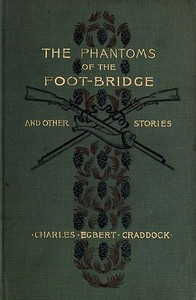
Reading A Mere Chance, I kept thinking how Rachel’s measured social steps echo the quiet unease in those old stories where a bridge appears solid until you step on it. Both feel like rooms with hidden doors—polished surfaces, whispered histories. The Melbourne drawing-rooms and the phantom-creaking planks share that same patient, watchful stillness. I found myself holding my breath, remembering The Phantoms of the Foot-Bridge, and Other Stories — Edition Insights the way one remembers a half-told secret.
There are no reviews for this eBook.
There are no comments for this eBook.
Reader reflection
How will you remember this book?
Save your reaction, strongest insight, and memorable passage.
Your progress
0
/
10
2
Was reading this book enjoyable?
3
Would you recommend this book to another reader?
4
How easy was the book to follow?
5
How did the pace of the book feel?
6
Did the book offer a fresh perspective?
7
Could you apply anything you learned?
8
Was the book easy to understand?
9
In one sentence, what did you learn?
10