1

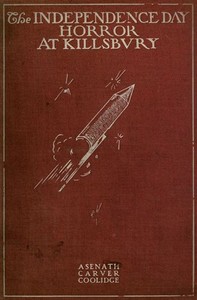
The Independence Day Horror at Killsbury — Reading Companion
(0 User reviews)
510
Project Gutenberg
2012
Not confirmed
Didactic fiction; Children -- Death -- Fiction; Fourth of July -- Fiction; Fireworks -- Fiction
Readers of public-domain and historical texts
Project Gutenberg digital edition
en
Edition facts
Words
57,047
Reading time
249 min
Text sections
6
The Independence Day Horror at Killsbury — Reading Companion can be approached with a clearer sense of reading commitment from its source measurements: 57,047 words, 4 hr 9 min estimated reading time, and 6 detected text sections.
The text analysis averages about 16.4 words per sentence, while the detected sections provide another way to judge how the source is divided.
Project Gutenberg metadata also associates the work with “Didactic fiction,” connecting these edition facts with the source record’s subject description.
Source:
Project Gutenberg record #39479
A 1905 didactic novel contrasting a wealthy family's Fourth of July celebration with a working-class mother's tragedy, exposing the human cost of fireworks and militaristic patriotism through vivid, ironic prose.
Read the complete public-domain text at its original source.
Read on Project GutenbergAsenath Carver Coolidge's 1905 novel opens with a pointed preface that frames the Fourth of July as a "golden harvest" for "the monsters of militarism and greed," immediately establishing the work as a reform-minded polemic. The story then shifts to the Cornwallis Cottage and the Schwarmer Mansion, where the wealthy Schwarmer family prepares an elaborate fireworks display. The narrative voice oscillates between satirical depictions of the guests' frivolity and stark, almost clinical descriptions of the ensuing disaster. Coolidge's prose is precise and unflinching, particularly in the scene where a "huge stream of serpentine fire" issues from the Engine House, growing into "monstrous coils" before a loud report. The contrast between the spectators' applause and Adelaide Schwarmer's dawning horror sets up a central tension between spectacle and suffering.
The Rhetoric of Reform and the Spectacle of Danger
The preface directly addresses mothers, demanding that the country "be made a fit place for children to live in" and decrying the annual sacrifice of "three or four thousand boys." This reformist voice, however, gives way to a narrative that dramatizes the very dangers it condemns. The fireworks display is described in elaborate, almost loving detail—the "serpentine fire," the "lurid colors," the "great globe of fire"—before the accident occurs. Coolidge uses the language of spectacle to critique it, forcing readers to see the beauty in the danger. The guests' applause after the explosion and the woman's cry of "Fire!" underscores their willful blindness. The gardener's wife, Mary, is reduced to a "woman's form clad in white" on a "fiery background," a living tableau that the audience mistakes for part of the show. This blurring of art and reality is a key rhetorical strategy: the horror is real, but the wealthy treat it as entertainment.
Class, Gender, and the Silencing of Tragedy
The novel sharply delineates social hierarchies. The Schwarmer family and their guests occupy a world of "magnificent shawls" and polite applause, while the gardener's wife and her baby are invisible until disaster strikes. When Mary faints, Mrs. Schwarmer throws her shawl over her—a gesture of charity that also conceals. The men quickly extinguish the fire and declare it "a trifling affair." The baby's fate is dismissed as "a matter of no earthly consequence." Adelaide, the young daughter, is the only one who persists in asking about the lost child, but her mother silences her: "It is not proper for you to ask questions about such matters." This moment crystallizes the novel's critique of gendered propriety. Adelaide's empathy is suppressed by social convention, while the male authority figures—her father, Mr. Bombs, Dr. Orison—control the narrative, deciding what is worth discussing. The guests' cheerful breakfast the next morning, with "not a word" about the tragedy, demonstrates how the upper class maintains its composure by erasing the suffering of others.
Irony and the Unreliable Spectator
Coolidge employs a detached, ironic narrator who reports events without overt commentary, letting the contradictions speak for themselves. The guests interpret the accident as part of the performance: "They thought she was there advisedly to represent the realistic finishing of Mr. Bombs' piece." Dr. Orison's remark, "It is ever thus after war," is delivered as a platitude, not a protest. The narrative voice does not correct these misreadings; it simply records them. This technique forces readers to become critical spectators themselves, recognizing the gap between what the characters see and what is actually happening. The description of Mr. Bombs' "ingenious explanation" for the failure of his piece and his "prompt action in turning on the hose" is tinged with irony—he is praised for solving a problem he caused. The novel thus trains its audience to distrust surface appearances and to question whose stories are being told and whose are being ignored.
Readers should attend to the novel's structural contrasts: the leisurely pace of the opening chapters versus the sudden violence of the fireworks accident; the polite dialogue of the wealthy versus the inarticulate cries of Mary; the public spectacle versus the private agony. Coolidge's prose rewards close attention to detail—the way a shawl becomes a symbol of both charity and concealment, or how a single line of dialogue can reveal a character's moral stance. The preface sets out the author's reformist agenda, but the novel itself works more subtly, using irony and indirection to implicate the reader in the very complacency it condemns.
I remember finishing The Independence Day Horror at Killsbury and feeling that ache — how a single celebration can hide so much unspoken loss. It made me think of the quiet ways we overlook the solitary, which is why Lonesome Town — Key Ideas to Explore stayed with me afterward. Some stories just leave that hush behind, like an empty chair at the table.
There are no reviews for this eBook.
There are no comments for this eBook.
Reader reflection
What did you think of this book?
Answer a few questions and save a private reflection on this device.
Your progress
0
/
10
2
Was reading this book enjoyable?
3
Would you recommend this book to another reader?
4
How much effort did this book require?
5
Could you follow the author’s main argument?
6
Did you gain anything practical from the text?
7
Did you relate to its people, ideas, or situations?
8
Would you like to discuss this book with someone?
9
In one sentence, what did you learn?
10