1

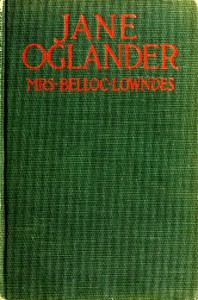
Jane Oglander — Reading Companion
(0 User reviews)
1973
Project Gutenberg
2011
Not confirmed
Country homes -- Fiction; Man-woman relationships -- Fiction; England -- Social life and customs -- Fiction
Readers of public-domain and historical texts
Project Gutenberg digital edition
en
Edition facts
Words
75,463
Reading time
329 min
Text sections
7
Before opening Jane Oglander — Reading Companion, the edition data offers a quick orientation: 75,463 words, 5 hr 29 min estimated reading time, and 7 detected text sections.
The text analysis averages about 18.3 words per sentence, while the detected sections provide another way to judge how the source is divided.
Project Gutenberg metadata also associates the work with “Country homes -- Fiction,” connecting these edition facts with the source record’s subject description.
Source:
Project Gutenberg record #37243
An editorial note on Marie Belloc Lowndes's Jane Oglander, focusing on authorial choices in diction, dialogue, and description as seen in the opening chapters, including the use of an observer figure, restrained characterization, and symbolic color motifs.
Read the complete public-domain text at its original source.
Read on Project GutenbergMarie Belloc Lowndes opens Jane Oglander with a striking narrative device: a chance observer on Westminster Bridge. The prologue introduces a man named Ryecroft, described as a future interpreter of London life, who studies Jane as she pauses to look at the Surrey side. This framing establishes a detached, almost sociological gaze, yet the novel quickly shifts into intimate third-person narration. Lowndes’s prose is precise and restrained, favoring concrete details over emotional exposition. Jane’s grey cloak, Quakerish cap, and the old woman’s remark that “Grey is Miss Oglander’s colour” signal a deliberate symbolic palette. The dialogue, too, is economical—Jane’s words about a porter and a child reveal her kindness without sentimentality.
The Observer as Narrative Lens
Lowndes introduces Ryecroft, a penniless writer, who watches Jane on Westminster Bridge. This framing device is unusual: the narrator explicitly notes that Ryecroft is “destined to become what a lover of literature has described as the greatest interpreter of the human side of London life since Dickens.” Yet after the prologue, Ryecroft disappears entirely. The author uses him to establish a tone of detached observation, then abandons the conceit. This choice suggests Lowndes wanted to signal a documentary impulse without committing to it. The bridge scene itself is carefully paced: Jane stops three times, each pause noted, and Ryecroft’s attention is described as “attentive.” The language is clinical—“a ceaseless stream of human beings ebbed to and fro”—but the focus on Jane’s specific gaze (at St. Thomas’s Hospital, Lambeth Palace) grounds the scene in particular geography.
Dialogue and the Economy of Emotion
Lowndes’s dialogue is spare and weighted. When Dick Wantele meets Jane at the station, their exchange is brief: “Dick,” she said, “how kind of you to come and meet me! I’m so glad to see you!” The narrator then notes that Wantele saw “a queer feeling of mingled pleasure and jealous pain.” The emotion is told, not shown, through the narrator’s filter. Later, when Wantele mutters “Jane, you know what I would say to you—how truly I wish you joy,” Jane replies, “I knew that you would wish me joy.” The dialogue avoids direct declaration; the subtext is carried by the characters’ awareness of each other’s feelings. Lowndes often uses indirect speech or reported thought, as when Wantele “kept reminding himself, with deep, voiceless melancholy” about the last time. This technique keeps the prose tight and the emotional temperature controlled.
Color and Dress as Character Markers
Lowndes uses clothing and color to define Jane Oglander. The old cottage woman’s observation—“Grey is Miss Oglander’s colour, and if she was ‘appy perhaps light blue”—is recalled by Wantele as Jane approaches in a long grey cloak with a white vest and a touch of blue underneath. The grey suggests austerity, the blue hints at hidden joy. Jane’s “Quakerish little cap-like hat with strings tied under her soft chin” reinforces a sense of simplicity and moral clarity. This attention to dress is consistent: earlier, the narrator notes that Jane looked “set apart from the women about her, especially from those of her own age, by the greater simplicity, the almost austerity of her dress.” Lowndes does not describe faces at length; instead, she lets costume carry meaning. The grey-blue motif recurs, tying Jane’s emotional state to her appearance.
Setting and the Rhythm of Movement
Lowndes uses setting to mirror psychological states. The novel opens with Jane walking across Westminster Bridge, a liminal space between the Surrey side and Westminster. She stops three times, looking back at the Surrey side—the side she came from—rather than forward. This backward glance suggests hesitation or attachment. Later, when Wantele meets Jane at the station, they “turned into the field path which formed a short cut to Rede Place.” The movement from station to field path to house is described in simple, sequential steps. The Garden Room and Greek Room are named but not described; they function as thresholds for emotional encounters. Lowndes’s settings are functional rather than atmospheric: the bridge, the station, the path, the room. Each space marks a transition in the narrative, and the characters’ movements through them are deliberate, almost choreographed.
Lowndes’s authorial choices in Jane Oglander reward attention to small details: a glance, a color, a pause. The novel’s restraint—its refusal to overstate emotion or explain motive—creates a texture that feels modern. Readers may find that the gaps between what is said and what is felt are where the story truly lives. The excerpts suggest a work of quiet observation rather than dramatic incident, and the pleasure lies in watching Lowndes build character through gesture and omission.
That rainy afternoon, I kept returning to how Lowndes lets the observer figure in Jane Oglander reveal character through small, deliberate gestures rather than grand statements. It felt like watching light through grey windows, quiet and precise. The same restraint carried me, almost by accident, to The Sixth Sense: A Novel — Background and Themes, where the unseen lingers just as carefully beneath the surface of ordinary rooms.
There are no reviews for this eBook.
There are no comments for this eBook.
Reader reflection
Before you leave, reflect on the book
Use these questions to collect your thoughts before moving on.
Your progress
0
/
10
2
How did the book work for you overall?
3
How likely are you to recommend this book?
4
How demanding did the text feel?
5
How clear did the writing feel?
6
Did it raise ideas you would like to talk about?
7
Did any part of the book stay with you emotionally?
8
Did the book deliver what you hoped for?
9
In one sentence, what did you learn?
10