1

A Tatter of Scarlet: Adventurous Episodes of the Commune in the Midi 1871 — Edition Insights
(0 User reviews)
264
Project Gutenberg
2011
Not confirmed
Adventure stories; Franco-Prussian War, 1870-1871 -- Fiction; Scots -- France -- Fiction
Readers of public-domain and historical texts
Project Gutenberg digital edition
en
Edition facts
Words
102,744
Reading time
447 min
Text sections
9
This digital edition of A Tatter of Scarlet: Adventurous Episodes of the Commune in the Midi 1871 — Edition Insights is described by source-level measurements including 102,744 words, 7 hr 27 min estimated reading time, and 9 detected text sections.
The text analysis averages about 19.1 words per sentence, while the detected sections provide another way to judge how the source is divided.
Project Gutenberg metadata also associates the work with “Adventure stories,” connecting these edition facts with the source record’s subject description.
Source:
Project Gutenberg record #36945
S. R. Crockett's 1913 adventure novel follows Scottish narrator Angus Cawdor and his Irish friend Hugh Deventer amid the 1871 Commune in southern France. The narrative shifts between schoolboy bravado, political intrigue, and personal relationships, with a distinctive Scots-inflected voice and episodic structure.
Read the complete public-domain text at its original source.
Read on Project GutenbergThe novel opens with a striking image of two schoolboys—a Scot and an Irishman—leaning on a parapet watching the tricolour come down in Aramon. The narrator, Angus Cawdor, immediately establishes a voice that is both self-deprecating and wryly observant, describing how he and Deventer keep the French seniors in awe through their reputation for boxing. This opening scene sets a tone of youthful bravado that will later give way to more serious political and romantic entanglements.
Crockett's prose is marked by a colloquial, almost conversational rhythm, with frequent dashes and asides that mimic spoken thought. The narrative voice shifts between action-driven passages and reflective interludes, as when Angus muses on his own motives or the complexities of character. The episodic structure—signalled by chapter titles like 'How the Tricolour Came Down' and 'The Laundry Door'—suggests a picaresque approach, yet the story is anchored by recurring motifs of loyalty, national identity, and the tension between personal desire and public duty.
A Scots-Irish Lens on the Midi
The narrative is filtered through the consciousness of Angus Cawdor, a Scot who repeatedly asserts his national difference from the French characters. This perspective colours every observation, from the schoolyard politics to the unfolding Commune. Crockett uses Angus's voice to create a sense of detachment and irony, as when he notes that the French 'had explained the difference to them many times' but remain unconvinced. The Irishman Deventer serves as a foil—more physically impulsive, less introspective—and their friendship provides a stable emotional core amid the chaos.
The setting in the Midi (southern France) is rendered through specific details: the mistral wind, the suspension bridge, the works of Dennis Deventer. These elements ground the story in a particular place and time, while the Scots-Irish perspective keeps the reader at a slight remove, observing the French political turmoil as outsiders. This narrative strategy allows Crockett to comment on the Commune without fully committing to any ideological position, focusing instead on the personal dramas that unfold against the historical backdrop.
Pace and the Interruption of Action
Crockett varies the pace markedly between chapters. Action sequences—such as the pursuit of the Black Band or the confrontation with Keller Bey—are compressed into short, punchy paragraphs with rapid dialogue. In contrast, reflective passages expand time, as when Angus lingers on a gesture or a glance. For instance, the description of Alida throwing her head back to toss blonde curls out of her eyes halts the narrative momentum, drawing attention to a small, intimate moment.
The novel also employs ellipses and abrupt transitions. Chapter endings often cut away at a moment of tension, leaving the resolution to the next chapter. This technique, combined with the episodic chapter titles, creates a sense of forward movement while allowing for digressions into character study. The effect is a narrative that feels both breathless and contemplative, shifting between the public events of the Commune and the private lives of the characters.
Voice and the Unreliable Narrator
Angus Cawdor's narration is marked by self-awareness and occasional unreliability. He admits to acting 'like a kind of hero' in one moment, only to undercut that impression later: 'Now I am not so sure.' This retrospective doubt invites the reader to question his judgments, particularly about characters like Alida and Rhoda Polly. The narrative voice is also distinctly Scottish in its idioms and rhythms, using phrases like 'I thought this no ill sign' and 'she makes me so ashamed of myself.'
Crockett further complicates the voice by including direct addresses to the reader and asides that break the fourth wall. The effect is a narrator who is both participant and commentator, shaping the story as he tells it. This technique aligns with the picaresque tradition, where the hero's adventures are filtered through a knowing, often ironic perspective. The reader is never allowed to forget that this is a constructed tale, told by a man looking back on his youth with a mixture of nostalgia and critical distance.
Readers should approach A Tatter of Scarlet as a hybrid work—part adventure story, part character study, part historical fiction. The narrative rewards attention to its shifts in tone and pace, from the schoolboy humour of the opening chapters to the darker political manoeuvrings later on. Crockett's use of a Scottish narrator offers a unique angle on the French Commune, one that prioritises personal relationships over ideological debate. For those interested in the period or in narrative voice, this novel provides a rich, if episodic, experience.
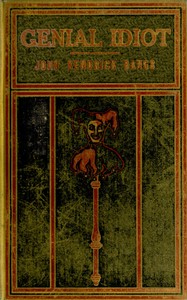
Away back, when I first met Angus and Hugh in Crockett’s rugged tale, that Scots voice felt like a letter from an old friend. It lingers, that mix of bravado and quiet ache. Reading The Genial Idiot: His Views and Reviews — Inside the Classic brought back that same unhurried comfort, a familiar, wry presence for a rainy afternoon. Some books just feel like company.
There are no reviews for this eBook.
There are no comments for this eBook.
Reader reflection
Before you leave, reflect on the book
Use these questions to collect your thoughts before moving on.
Your progress
0
/
10
2
What was your overall reaction to the book?
3
How likely are you to recommend this book?
4
What was the reading difficulty like?
5
Which part made the strongest impression?
6
How original did the book feel?
7
Could you follow the author’s main argument?
8
Do you expect to return to this book?
9
In one sentence, what did you learn?
10