1

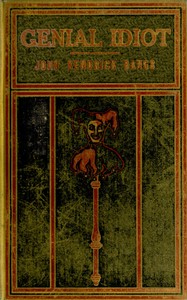
The Genial Idiot: His Views and Reviews — Inside the Classic
(0 User reviews)
677
Project Gutenberg
2011
Not confirmed
Humorous stories; Conversation -- Fiction; Boardinghouses -- Fiction
Readers of public-domain and historical texts
Project Gutenberg digital edition
en
Edition facts
Words
39,816
Reading time
174 min
Text sections
5
The Genial Idiot: His Views and Reviews — Inside the Classic can be approached with a clearer sense of reading commitment from its source measurements: 39,816 words, 2 hr 54 min estimated reading time, and 5 detected text sections.
The text analysis averages about 17.9 words per sentence, while the detected sections provide another way to judge how the source is divided.
Project Gutenberg metadata also associates the work with “Humorous stories,” connecting these edition facts with the source record’s subject description.
Source:
Project Gutenberg record #35302
A conversational satire in which the Idiot debates proverbs, household management, and social conventions with a cast of friends, revealing a tension between catalog subjects (boardinghouse, conversation) and the actual boardinghouse-less, dialogue-driven structure.
Read the complete public-domain text at its original source.
Read on Project GutenbergThe Genial Idiot opens not with a boardinghouse or a picaresque adventure, but with a man behind a newspaper declaring that proverbs are “hocus-pocus and buncombe.” The Idiot’s first line—a response to a Glasgow professor’s statement—immediately establishes the book’s format: a series of dialogues among a small circle of named speakers (Mr. Whitechoker, the Doctor, Mr. Brief) who trade opinions on topics from maxims to housemaids’ unions. The catalog lists “Boardinghouses — Fiction” and “Conversation — Fiction,” yet the excerpts contain no boardinghouse setting; the conversations occur in an undefined domestic space. The structure is closer to a debating society than a novel, with each chapter headed by a topic rather than a plot event.
The Idiot’s Argumentative Method
The Idiot’s rhetoric relies on absurd literal readings and unexpected analogies. When he discusses proverbs, he misquotes “A stitch in time saves nine” as “A stitch in the side is worth two in the hand,” then dismisses it as “Tommy-rot.” His interlocutors—Mr. Whitechoker, the Doctor, and Mr. Brief—serve as straight men, offering conventional objections that the Idiot parries with elaborate hypotheticals. In the chapter on housemaids’ unions, he proposes a system of “domiciliary visits” by union inspectors to check for dust, comparing it to bank examiners. The lawyer Mr. Brief scoffs, but the Idiot traps him by equating the Bar Association with a “Lawyer’s Union Number Six.” This pattern of playful misdirection and logical bait-and-switch drives the humor, making each chapter a self-contained rhetorical game.
What the Catalog Subjects Omit
The Project Gutenberg catalog assigns “Boardinghouses — Fiction” and “Conversation — Fiction,” but the excerpts show no boardinghouse. The speakers gather in what appears to be a private home—the Idiot reads a newspaper, the Doctor and Mr. Brief are present, and a “madam” is addressed in the union discussion. The conversation is not casual gossip but structured debate on social reforms, proverbs, and domestic labor. The “Adventure & Picaresque” category is equally misleading: there is no travel, no episodic misadventure, no roguish protagonist. Instead, the book is a series of intellectual sparring matches, closer to Socratic dialogue than picaresque fiction. The catalog labels may reflect the publisher’s marketing or a broad genre assignment, but they do not capture the book’s actual form.
Voice and Period Detail
The dialogue is peppered with period-specific references: “the Ibsen Sewing-Circle,” “Burke and the thunderbolts of Jove,” “Coke and Blackstone.” These details anchor the conversations in an early 20th-century American milieu of middle-class intellectual play. The Idiot’s language is colloquial but literate—he uses “buncombe” and “Tommy-rot” alongside allusions to classical oratory. The other characters are identified only by nicknames or titles (Mr. Whitechoker, the Doctor, Mr. Brief), suggesting a club-like familiarity. The excerpts do not reveal whether these characters reappear consistently or if the Idiot is the sole link between chapters. The voice is consistent: the Idiot speaks in long, hypothetical scenarios, while his friends interrupt with skepticism or indignation. This pattern, visible across the two excerpted chapters, suggests the book’s unity lies in tone rather than plot.
Readers should approach The Genial Idiot as a collection of verbal contests, not a narrative. The Idiot’s arguments are meant to be enjoyed for their cleverness, not taken as serious proposals. Pay attention to how each chapter’s topic—proverbs, husbands, finance, fame—serves as a springboard for the Idiot’s logic-chopping. The book rewards those who appreciate wordplay and period humor, but those expecting a story about boardinghouse life will need to adjust expectations.
There’s something about the way that book lets you sit with its contradictions—all talk, no room—that reminds me of lingering over A Tatter of Scarlet: Adventurous Episodes of the Commune in the Midi 1871 — Edition Insights. Both leave you holding a feeling more than a plot, like a half-finished thought you keep turning over.
There are no reviews for this eBook.
There are no comments for this eBook.
Reader reflection
What was your reading experience?
Capture what you thought, learned, and would like to remember.
Your progress
0
/
10
2
How did the book work for you overall?
3
Would you pass this book on to a friend?
4
Did the language feel accessible?
5
How personally connected did you feel to the book?
6
Could you see yourself revisiting this book?
7
How useful did the reading feel?
8
Did the book give you something worth debating?
9
What changed or sharpened your thinking?
10