1

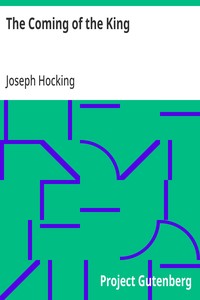
The Coming of the King — Reading Companion
(0 User reviews)
64
Project Gutenberg
2011
Not confirmed
Historical fiction; Adventure stories; Great Britain -- History -- Charles II, 1660-1685 -- Fiction
Readers of public-domain and historical texts
Project Gutenberg digital edition
en
Edition facts
Words
118,938
Reading time
518 min
Text sections
11
Before opening The Coming of the King — Reading Companion, the edition data offers a quick orientation: 118,938 words, 8 hr 38 min estimated reading time, and 11 detected text sections.
The text analysis averages about 16.6 words per sentence, while the detected sections provide another way to judge how the source is divided.
Project Gutenberg metadata also associates the work with “Historical fiction,” connecting these edition facts with the source record’s subject description.
Source:
Project Gutenberg record #37042
An editorial note on Joseph Hocking's 1904 historical adventure, focusing on the narrator's diary-based testimony, the tension between Royalist and Puritan loyalties, and the recurring motif of concealed identity in the excerpts.
Read the complete public-domain text at its original source.
Read on Project GutenbergJoseph Hocking's The Coming of the King opens with a narrator who insists his account will 'clear my name from various aspersions' and is based on a diary kept at his father's urging. This frame establishes the story as a defensive testimony, not a neutral chronicle. The excerpts reveal a world where political allegiance—Royalist or Puritan—shapes every encounter, from the opening mention of Archbishop Laud to the roadside confrontation with a drunken constable. The narrator's readiness to draw sword and pistol, yet his hesitation before using them, suggests a code of honour tested by necessity.
The Diary as Shield and Sword
The narrator's opening declaration that he has 'done nothing which makes me fear the light' immediately positions his written record as a defence. He states he was 'trained by my father to follow the custom of the times, and to describe in a diary an account of my daily doings.' This diary is not merely a memory aid but a legal and moral instrument. The phrase 'if ever my memory fails me, to refer to the books which have been carefully kept' underscores the weight placed on written evidence. Yet the excerpts show that the diary's existence is itself a claim to truthfulness in a world of 'intrigue' and 'mystery.' The reader is thus invited to view the narrative as a curated document, not an unmediated confession.
Concealment and Exposure on the Road
The roadside encounter with three men—one a constable—dramatises the tension between hidden identity and forced revelation. The narrator's companion, Mistress Constance, is veiled and silent; the men demand she 'show us her face' and 'give us a kiss.' The narrator's response—drawing his sword and firing a pistol—protects her anonymity but also escalates violence. The constable, Peter Blewitt, is goaded by a companion who calls him a coward, revealing how public performance of authority can override sober judgment. After the flight, Mistress Constance thanks the narrator but immediately distances herself: 'I am safe now. You need not fear for me any more.' This abrupt separation hints at secrets she carries, secrets the diary may later uncover.
The Weight of a Single Pistol Shot
The narrator's use of his pistol is described with clinical precision: 'I lifted my left arm and fired. I have been told since that the bullet only grazed the man's shoulder, but he cried out like one in the death agony.' This detail—the discrepancy between the minor wound and the dramatic reaction—highlights how perception shapes reality in the story. The man's cry of 'I'm killed, I'm killed!' and his flight 'as though the furies were at his heels' suggests that fear, not injury, decides the outcome. The narrator's hesitation before shooting—'I was loth, great as the danger was, to use my weapons'—contrasts with his later decisiveness, marking a threshold crossed. The episode ends with Mistress Constance asking 'Are you hurt?'—a question that shifts focus from the assailants to the narrator's own vulnerability.
Readers should attend to the gaps between what the narrator claims and what the excerpts show. The diary's promise of 'a correct account' sits uneasily with the narrator's admission that he was 'drawn, in spite of myself' into events. The roadside scene, with its veiled woman, drunken constable, and single pistol shot, is a microcosm of the larger political and personal conflicts the book explores. Watch for how the narrator's training—both in arms and in writing—shapes his testimony, and how the 'coming of the king' may alter the very truths he sets down.
This diary conceit reminded me of my grandfather’s old journal, where he underlined every mention of his own name—a quiet sort of hiding in plain sight. The concealed identities here felt like that. I once found a similar echo in First Person Paramount — Context and Discussion, where the narrator’s voice also trembles between confession and performance, making me trust each word a little less, and miss my grandfather more.
There are no reviews for this eBook.
There are no comments for this eBook.
Reader reflection
Record your reading impressions
A brief reflection can help important ideas stay with you longer.
Your progress
0
/
10
2
Did this book hold your interest?
3
Would you pass this book on to a friend?
4
How easy was the book to follow?
5
Which part made the strongest impression?
6
Would you read this book again?
7
Was the book moving at the right speed?
8
How understandable was the text?
9
What is the main idea you are taking away?
10