1

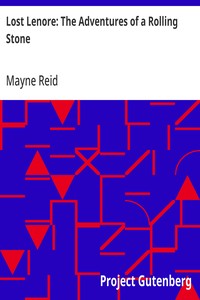
Lost Lenore: The Adventures of a Rolling Stone — Edition Insights
(0 User reviews)
2396
Project Gutenberg
2011
Not confirmed
Fiction; Adventure stories; Dime novels
Readers of public-domain and historical texts
Project Gutenberg digital edition
en
Edition facts
Words
147,346
Reading time
641 min
Text sections
16
For Lost Lenore: The Adventures of a Rolling Stone — Edition Insights, the stored edition analysis reports 147,346 words, 10 hr 41 min estimated reading time, and 16 detected text sections.
The text analysis averages about 20.9 words per sentence, while the detected sections provide another way to judge how the source is divided.
Project Gutenberg metadata also associates the work with “Fiction,” connecting these edition facts with the source record’s subject description.
Source:
Project Gutenberg record #35443
A first-person picaresque memoir following Rowland Stone from his Dublin childhood through adventures in Australia's goldfields, blending wry self-reflection with unflinching observations of colonial society.
Read the complete public-domain text at its original source.
Read on Project GutenbergThe narrator, Rowland Stone, introduces himself with a deadpan genealogy that traces his lineage back to Noah, then immediately undercuts it by noting his father was a saddle-maker in Dublin. This tonal shift—from mock-heroic ancestry to humble specifics—sets the pattern for a memoir that treats its own adventures with a mixture of self-deprecation and sharp social commentary. The excerpts show a narrator who is both participant and observer, whether describing his childhood resistance to clean shirts or the drunkenness and violence of 1850s Melbourne.
A Self-Made Origin Story
The opening chapter establishes a distinctive narrative voice through its treatment of family history. Rowland Stone claims descent from an "old and illustrious family" and offers as proof the fact that he exists, then pivots to his father William Stone, a saddle and harness maker in Dublin. The humor lies in the gap between the grand claim and the ordinary reality. The narrator’s tone is wryly self-aware: he admits his mother probably treated him "kindly enough" despite his childhood belief that she thwarted him. Specific details—the struggle of two women to put a clean shirt on him, his habit of running away from home and school—ground the voice in concrete memory rather than generic nostalgia. This opening suggests a memoir that will balance self-mockery with genuine affection, and that the narrator’s "rolling stone" nature may be as much a matter of temperament as circumstance.
Melbourne as a Colonial Gomorrah
When Rowland Stone arrives in Melbourne in 1853, his description is unsparing. He notes men and women in the streets "in a state of beastly intoxication," black eyes as common evidence of "mutual 'misunderstanding,'" and profane language from public houses. The detail that hotel keepers preferred the custom of drunken diggers over respectable people—taking bags of gold dust and letting them drink until only five pounds remained—is both specific and damning. Stone calls Melbourne a "colonial Gomorrah" and claims most of its 1853 inhabitants have since "killed themselves off by drink and dissipation." Yet he also records absurdities: men carrying riding whips and wearing spurs who had never ridden a horse. This mixture of disgust and amusement, of moral judgment and ethnographic curiosity, gives the passage a texture that goes beyond simple condemnation.
The Digger's Threat and the Damper
On the journey to the McIvor diggings, a traveling companion who had been drunk the night before refuses breakfast and then food offered during the day, repeating a threat: "I'll make it a caution to the man as keeps it. I'll eat all before me." When they finally reach a coffee-house, the dinner placed before them is a shoulder of mutton already "havocked" by previous diners, accompanied by a loaf baked in ashes called a "damper." The anticlimax—the grand threat meeting meager reality—is a small comic set piece. It also reveals the conditions of goldfields travel: reliance on roadside eating houses, the improvisation of food, and the way drink and hunger shape behavior. The episode is narrated with a deadpan restraint that lets the absurdity speak for itself, characteristic of the memoir’s approach to hardship.
Readers should note that the excerpts cover only the beginning and a middle section of a long narrative. The catalog subjects list this as a dime novel and adventure story, but the surviving text shows a narrator more interested in social observation and self-portraiture than in plot mechanics. The voice is the main event: ironic, specific, and willing to pause for a digger’s threat or a childhood struggle with a shirt. Approach it as a picaresque memoir rather than a conventional adventure, and let the narrator’s tone guide your expectations.
I’ve held Rowland Stone’s restless confession here, that wry ache for home even amid gold dust, and it put me in mind of another quiet volume, Dutch the Diver; Or, A Man's Mistake — Reading Notes, where a man’s error lingers like pipe smoke. Both whisper of choices half-regretted, and I set them side by side on my shelf, old friends who never met.
There are no reviews for this eBook.
There are no comments for this eBook.
Reader reflection
What was your reading experience?
Capture what you thought, learned, and would like to remember.
Your progress
0
/
10
2
How did the book work for you overall?
3
Is this a title you would suggest to others?
4
Did the language feel accessible?
5
How would you describe its reading pace?
6
Could you see yourself revisiting this book?
7
How did the reading compare with what you expected?
8
Did the book offer a fresh perspective?
9
In one sentence, what did you learn?
10