1

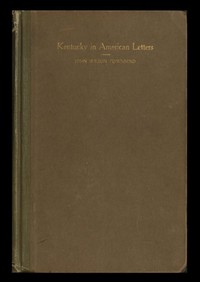
Kentucky in American Letters, 1784-1912. Vol. 2 of 2 — Themes and Context
(0 User reviews)
1094
Project Gutenberg
2012
Not confirmed
American literature -- Kentucky -- Bio-bibliography; Authors, American -- Homes and haunts -- Kentucky; American literature -- Kentucky; Kentucky -- Literary collections; Kentucky -- Intellectual life; Kentucky -- In literature
Readers of public-domain and historical texts
Project Gutenberg digital edition
en
Edition facts
Words
124,858
Reading time
543 min
Text sections
16
Before opening Kentucky in American Letters, 1784-1912. Vol. 2 of 2 — Themes and Context, the edition data offers a quick orientation: 124,858 words, 9 hr 3 min estimated reading time, and 16 detected text sections.
The text analysis averages about 18.8 words per sentence, while the detected sections provide another way to judge how the source is divided.
Project Gutenberg metadata also associates the work with “American literature -- Kentucky -- Bio-bibliography,” connecting these edition facts with the source record’s subject description.
Source:
Project Gutenberg record #39407
Townsend's 1913 literary history catalogs Kentucky authors from 1784-1912, pairing biographical sketches with excerpts. The volume reveals how writers like Eliza Calvert Obenchain and Elizabeth Cherry Waltz used dialect and local settings, while the catalog subjects emphasize place over literary form.
Read the complete public-domain text at its original source.
Read on Project GutenbergJohn Wilson Townsend's Kentucky in American Letters, 1784-1912. Vol. 2 of 2 (1913) is a literary history that pairs biographical sketches of Kentucky authors with representative excerpts from their work. The volume covers figures from James Lane Allen to Elizabeth Cherry Waltz, often including dialect-heavy passages and local-color details. Townsend's editorial voice is present in his assessments—he calls Waltz's Pa Gladden 'a real creation' and notes that critics 'quarreled with the great amount of dialect.' The book's catalog subjects emphasize Kentucky's intellectual life and literary collections, but the excerpts themselves reveal a strong focus on vernacular speech, rural settings, and moral themes.
Biography as Literary Judgment
Townsend does not simply list authors; he evaluates them. In the entry for Elizabeth Cherry Waltz, he writes that she 'was one of the ablest writers that has ever conducted that department' of literary editor at The Courier-Journal. He also notes that her death 'occurred very suddenly' and that 'her grave is unmarked'—a detail that underscores his interest in the personal fates of these writers. The biographical sketches often include career milestones, such as Waltz's move from the Cincinnati Tribune to the Springfield Republic-Times, and her marriage to Frederick Hastings Waltz. Townsend's tone is admiring but not uncritical; he reports that some critics 'quarreled with the great amount of dialect' in Waltz's Pa Gladden stories, though he himself praises the character as 'a real creation.' This blend of biography and criticism gives the volume a dual character: it is both a reference work and a personal literary history.
Dialect and Local Color in the Excerpts
The excerpts Townsend selects often foreground dialect and regional speech. In the passage from Waltz's Pa Gladden, a character speaks in a thick vernacular: 'trikes a cawnfiel', den a orchid. Den you's dar.' The dialogue is rendered phonetically, and the setting is a rural Kentucky farm with 'dawgs and chickens' and a 'stile.' Similarly, the excerpt from Eliza Calvert Obenchain's 'Sweet Day of Rest' (not fully shown) likely continues this pattern. Townsend's own commentary sometimes acknowledges the dialect's prominence, as when he notes that 'most of which is used by Pa Gladden.' The excerpts thus serve as evidence of a literary tradition that valued local color and authentic speech, even as Townsend's catalog subjects—'American literature -- Kentucky'—frame the work as a regional collection.
The Catalog's Emphasis on Place vs. the Excerpts' Thematic Range
The catalog subjects for this volume list 'Kentucky -- Literary collections' and 'Kentucky -- In literature,' suggesting a tight focus on place. Yet the excerpts cover a broader thematic range. Waltz's Pa Gladden passage deals with illness, prayer, and domestic care: 'She was tossing on the warm bed, at times unable to speak intelligibly' and 'Pa Gladden knelt upon the boards and prayed fervently.' The moral weight of the scene—a man caring for a 'wandering woman'—is not explicitly tied to Kentucky geography. Similarly, other excerpts (like those from James Lane Allen or Nancy Huston Banks) may explore universal themes. Townsend's biographical notes also highlight national contexts: Waltz's The Ancient Landmark is described as 'a vigorous attack upon the divorce evil.' The volume thus presents Kentucky literature as engaged with broader American social issues, even as the catalog subjects emphasize regional identity.
Readers approaching this volume should treat it as a curated anthology rather than a comprehensive survey. Townsend's selections reflect his own tastes and the available canon of the early 1910s. The dialect passages reward careful reading for their linguistic texture, while the biographical sketches offer glimpses into the professional lives of now-obscure authors. Comparing the catalog subjects with the actual content reveals how 'Kentucky literature' was defined more by authorial origin than by thematic consistency.
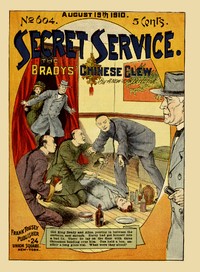
I kept thinking about how Townsend’s old book lingered on the place more than the plot, the way Kentucky’s hills felt heavier than any story. Then I stumbled onto that other volume, The Bradys' Chinese Clew; Or, The Secret Dens of Pell Street — Inside the Classic, and the same feeling returned—streets as characters, crowding out the mystery. Some stories just hold a geography in your chest.
There are no reviews for this eBook.
There are no comments for this eBook.
Reader reflection
How will you remember this book?
Save your reaction, strongest insight, and memorable passage.
Your progress
0
/
10
2
Did this book hold your interest?
3
Would you pass this book on to a friend?
4
How demanding did the text feel?
5
Would this book work well in a reading group?
6
What did you think about the pace?
7
Which element worked best for you?
8
Did the book meet your expectations?
9
In one sentence, what did you learn?
10